If you spend long hours looking at your phone, computer or other digital screens, you may have come across lutein when looking for ways to support your eye health.
Lutein and zeaxanthin are carotenoids naturally found in the macula, the central part of the retina used for reading and seeing detail. The body does not make lutein. You get it from food, or from a supplement if you want a stated amount. A lutein supplement does not treat tired eyes or replace an eye check.
What is lutein?
Lutein is a carotenoid found naturally in certain foods. Your body does not produce lutein, so it needs to come from your diet or from a supplement.
Dark leafy vegetables such as spinach and kale are good food sources of lutein. Egg yolks also contain lutein and zeaxanthin.
In the eyes, lutein is concentrated in the macula together with zeaxanthin. These macular carotenoids have antioxidant properties and form part of macular pigment.
Getting enough lutein through a balanced diet is one way to support everyday eye nutrition. For adults who want a stated amount of lutein each day, a supplement may also be an option. It does not replace food, screen habits or an eye examination.
Why is lutein important for eye health?
The macula plays an important role in central vision, which we rely on for activities such as reading, recognising faces and seeing details clearly.
Lutein and zeaxanthin are naturally found in the macula. Adequate intake of these carotenoids can be part of a daily approach to supporting eye nutrition.
Lutein supplements should not be viewed as a treatment for an eye condition. If you experience persistent eye discomfort, changes in vision or other eye symptoms, seek professional advice.
Who may consider lutein supplements?
Adults may consider a lutein supplement if they:
- want extra lutein and zeaxanthin as part of their daily nutrition
- do not regularly eat lutein rich foods such as leafy greens or eggs
- prefer a stated amount of lutein each day
For people who spend long hours in front of digital screens, good eye care habits still come first. Take regular screen breaks, adjust screen brightness and keep a comfortable viewing distance. Not everyone who uses a computer needs a capsule.
Food or supplements: which should you choose?
You can get lutein naturally from a variety of foods, particularly dark leafy vegetables and egg yolks.
Food comes first. A supplement can be an additional option for adults who want a set amount of lutein in their daily routine. You do not have to use food and a capsule together.
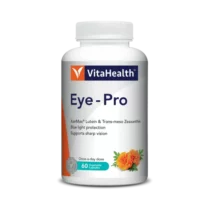
VitaHealth Eye-Pro
VitaHealth Eye-Pro is a lutein and zeaxanthin supplement for adults in Singapore.
Each vegetable capsule contains:
- 20 mg lutein
- 4 mg total zeaxanthin from trans and meso zeaxanthin
- 200 mg marigold flower extract (XanMax®)
That 4 mg is total zeaxanthin from both forms. It is not 4 mg of each.
Suggested use: Adults take 1 capsule once daily after a meal, or as directed.
Eye-Pro provides lutein and zeaxanthin as daily nutritional support. These carotenoids have antioxidant properties and are found in the macula. Screen habits and regular eye checks still matter. It does not treat digital eye strain, sharpen eyesight, or replace glasses.
See VitaHealth Eye-Pro.
How to choose a lutein supplement
When comparing lutein supplements, look beyond the words “eye health” or “eye blend”. Check:
- Lutein content: How many milligrams of lutein are provided per serving?
- Zeaxanthin content: Is the amount clearly stated?
- Dosage instructions: How many capsules are recommended each day?
- Capsule type: If you prefer a vegan option, check whether the capsule is suitable for you.
- Source and formulation: Check which ingredients provide the lutein and zeaxanthin.
VitaHealth Eye-Pro uses XanMax® marigold flower extract and provides 20 mg of lutein and 4 mg of trans-meso zeaxanthin per capsule.
Frequently Asked Questions (FAQs)
Lutein is a carotenoid naturally found in the macula, together with zeaxanthin and meso-zeaxanthin. These carotenoids form part of macular pigment and have antioxidant properties. They come from food or from a supplement. A lutein supplement does not treat an eye condition.

Adults get lutein from food such as leafy vegetables and egg yolks. A supplement may suit adults who want a stated amount of lutein. Not everyone who uses a computer needs a capsule.
No. Each VitaHealth Eye-Pro capsule provides 20 mg lutein together with 4 mg trans-meso zeaxanthin, sourced from 200 mg of XanMax® marigold flower extract.
Yes. Lutein is naturally found in foods such as spinach, kale and other dark leafy vegetables. Egg yolks also contain lutein and zeaxanthin. A supplement can add a set amount if your diet is low in these foods.
Zeaxanthin is the general name for a carotenoid naturally found in the macula. Trans-zeaxanthin and meso-zeaxanthin are different forms (isomers) of zeaxanthin. In VitaHealth Eye-Pro, the 4 mg total zeaxanthin refers to the combined amount of both forms per capsule.
References
- Abdel-Aal ESM, Akhtar H, Zaheer K, Ali R. Dietary sources of lutein and zeaxanthin carotenoids and their role in eye health. Nutrients. 2013;5(4):1169-1185. https://doi.org/10.3390/nu5041169
- McIntyre, C. (2 Nov 2025). Lutein: uses, side effects, and more. WebMD. https://www.webmd.com/vitamins-supplements/lutein
- VitaHealth Singapore. Eye-Pro. https://www.vitahealth.com.sg/product/eye-pro/
- VitaHealth Connection. Zeaxanthin. https://vitahealthconnection.com/ingredients-a-z/zeaxanthin/
- NutriScience. XanMax. https://nutriscienceusa.com/product/xanmax/


Vegan